
Navigating Ultra-Luxury Closings In Hillsboro Beach
May 7, 2026
May 7, 2026
If you are buying or selling in Hillsboro Beach at the ultra-luxury level, the closing is where small details can carry very large consequences. On this narrow barrier island between the Atlantic and the Intracoastal, a deal often involves more than price and signatures. You may need to coordinate title, survey, flood review, insurance timing, association records, funding verification, and strict wire security all at once. This guide will show you what matters most, where delays tend to happen, and how to keep a high-value closing on track. Let’s dive in.
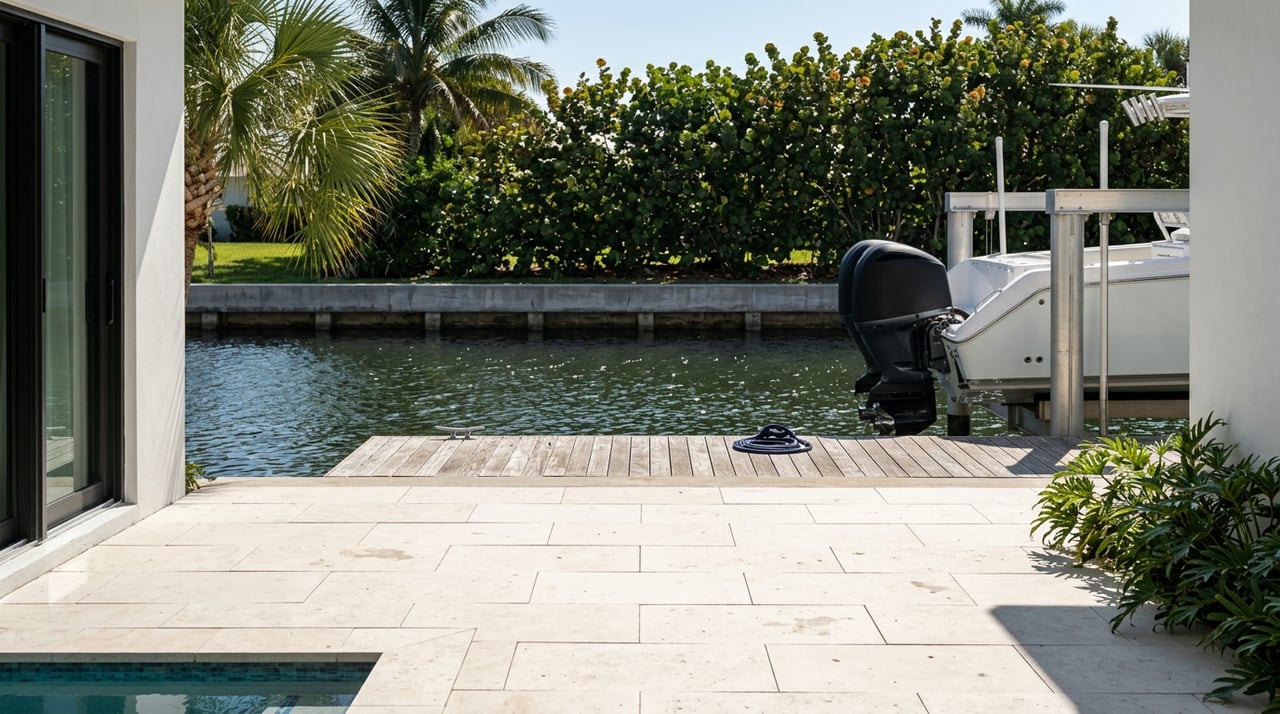
Hillsboro Beach has a uniquely layered closing environment because of its waterfront geography. Properties may involve oceanfront exposure, Intracoastal access, docks, seawalls, easements, or association governance, all of which can affect the final closing path.
That means your closing process may require more review than a typical inland sale. In many cases, title documents, surveys, flood-zone analysis, insurance placement, and condominium or HOA records all need attention at the same time.
For financed purchases, flood review can become a central issue. Federal flood rules require lenders to consider flood risk, and if a property is in a Special Flood Hazard Area, flood insurance may be required before the deal can close.
In Florida, the type of brokerage relationship matters more than many buyers and sellers realize. State law presumes transaction brokerage unless another relationship is established in writing.
That distinction is important in a seven- or eight-figure transaction. A transaction broker owes limited confidentiality, while a single-agent relationship includes broader fiduciary duties such as confidentiality and full disclosure.
When pricing strategy, motivation, timing, and financing terms need to stay tightly controlled, you want clarity early in the process. In an ultra-luxury deal, that is not a paperwork detail. It is part of your risk management.
At the luxury waterfront level, title and survey review should never be treated as routine. These documents can reveal easements, rights-of-way, boundary issues, and other recorded matters that may affect access, improvements, docks, or the usable footprint of the property.
Broward County records and indexes key instruments in the Official Records, including deeds, mortgages, liens, and declarations of condominium. Recording also requires payment of applicable fees and any documentary stamp taxes due.
For you as a buyer or seller, the practical takeaway is simple. Before closing, you want a clear picture of what is being conveyed, what is recorded against the property, and whether any survey-related issue could affect value or use.
If the property is in a condominium or HOA, estoppel certificates become a critical closing item. These certificates help confirm what is owed and can reveal unpaid assessments, violations, or other association obligations.
In Florida, condominium and HOA associations generally must issue an estoppel certificate within 10 business days of a request. That deadline helps, but it still means estoppels should be ordered early rather than left to the end.
In Hillsboro Beach, where many luxury properties are in beachfront or waterfront communities, this step can shape the closing calendar. If you wait too long, association paperwork can create avoidable pressure near the finish line.
An "as is" deal does not remove disclosure concerns in Florida residential sales. Known facts that materially affect value and are not readily observable still matter.
In a luxury waterfront transaction, latent defects can be especially sensitive. Water intrusion, structural concerns, or unpermitted work may not be obvious from a showing, but they can affect closing negotiations, lender comfort, and buyer confidence.
For sellers, early review can reduce the risk of last-minute surprises. For buyers, careful due diligence is essential because a high-end finish does not always reveal what is behind the walls or beneath the surface.
In coastal transactions, insurance is often a closing-critical item. If the property falls in a Special Flood Hazard Area and the community participates in the National Flood Insurance Program, a lender will generally require flood insurance for the building.
Timing matters here. NFIP policies commonly carry a 30-day waiting period unless the policy is required by a lender or tied to a map change.
That means flood and insurance review should start early, especially in financed deals. If coverage is not lined up on time, your closing date may be at risk.
A preapproval letter can show that you are a serious buyer, but it is not a final loan commitment. Lenders typically continue reviewing credit and other information, and many preapproval letters expire within 30 to 60 days.
If you are financing an ultra-luxury purchase, expect a more detailed review process. It is wise to compare the Loan Estimate and the Closing Disclosure before closing so you can catch changes before they become urgent.
For sellers, this is why buyer qualification matters. A polished offer is helpful, but what really protects your timeline is a buyer whose financing path is realistic and current.
Cash offers can reduce complexity, but they do not remove the need for verification. In luxury transactions, sellers commonly ask for proof of funds to confirm that the buyer has enough readily available cash to complete the purchase.
That request is not unusual. It is a practical way to reduce uncertainty and confirm that the deal can close as scheduled.
For buyers, having this documentation ready can strengthen your position. It signals preparedness, seriousness, and the ability to perform without financing delays.
If a seller is considered a foreign person for U.S. tax purposes, the closing may involve FIRPTA withholding. In most cases, the buyer becomes the withholding agent, and the standard withholding rate is 15% of the amount realized.
The IRS generally requires Form 8288 and Form 8288-A to report and pay the withheld tax by the 20th day after the transfer. In a high-value transaction, that is a major procedural issue, not a minor afterthought.
If your closing has a cross-border component, this should be addressed early. Waiting until final documents are prepared can create confusion, delay, or unnecessary exposure.
High-value closings are prime targets for business email compromise and wire fraud. Real estate transactions involve many moving parts and many communications, which creates openings for fake emails and altered wire instructions.
The FBI has warned that these emails can appear to come from a title company. That is why any change in wire instructions or funding directions should be verified independently through a trusted phone number or established process.
For you, this is one of the most important closing habits to follow. Never rely on an email alone for wire details, especially when large sums are moving on a deadline.
Closing day usually includes final document review, payment of funds due, and coordination with the closing agent and lender if financing is involved. The amount due at closing is typically paid by cashier’s check or wire transfer.
If you are financing, it helps to confirm with the lender or closing agent at least a week in advance how the Closing Disclosure will be delivered. That gives you time to review figures and resolve questions before the appointment.
You should also remember that escrow accounts often cover property taxes and homeowner’s insurance, but HOA fees are often not included. In a luxury condo or HOA property, that distinction matters.
Florida documentary stamp tax is a meaningful closing cost in Broward County. For deeds and similar documents transferring an interest in Florida real property, Broward County transfers are taxed at $0.70 per $100 of consideration.
Promissory notes are generally taxed at $0.35 per $100, capped at $2,450. Mortgages and other liens secured by Florida real property are also taxed at $0.35 per $100, but without that cap.
Broward County requires recording fees and any required documentary stamp taxes to be paid when documents are recorded in the Official Records. In practical terms, the transaction is not fully complete until recording and tax remittance have been handled correctly.
Florida allows remote online notarization for commissioned notaries who complete the required process and use approved technology. The system must support identity proofing, electronic seal and signature attachment, and recording of the audio-video session.
In an ultra-luxury transaction, that can be useful when parties are traveling, out of state, or working around compressed schedules. It can reduce friction, provided the document package and parties are suited to that format.
This is especially helpful in a market where buyers and sellers often manage multiple residences, travel calendars, or cross-border logistics. Convenience can matter, but only when it still supports a secure and compliant closing.
Ultra-luxury closings tend to work better when title, survey, estoppels, funding verification, recording, and post-closing disbursement are managed on one coordinated timeline. These tasks are connected, and delays in one area can quickly affect the rest.
That is especially true in Hillsboro Beach, where waterfront due diligence, association requirements, recording compliance, and fraud prevention often overlap. Fewer handoffs can help reduce delays, limit the number of people handling sensitive information, and make confidentiality easier to preserve.
For buyers and sellers who value discretion and efficiency, an integrated approach can make the process feel more controlled. In a market where time, privacy, and certainty all carry premium value, that matters.
If you are preparing for a Hillsboro Beach purchase or sale, the goal is not just to reach the closing table. It is to arrive there with fewer surprises, tighter controls, and a process built for the complexity of luxury waterfront property.
For a concierge-level approach that brings together waterfront market knowledge and title coordination, schedule a consultation with Patrick Barnicle.
Stay up to date on the latest real estate trends.




Get assistance in determining current property value, crafting a competitive offer, writing and negotiating a contract, and much more. Contact Patrick today.