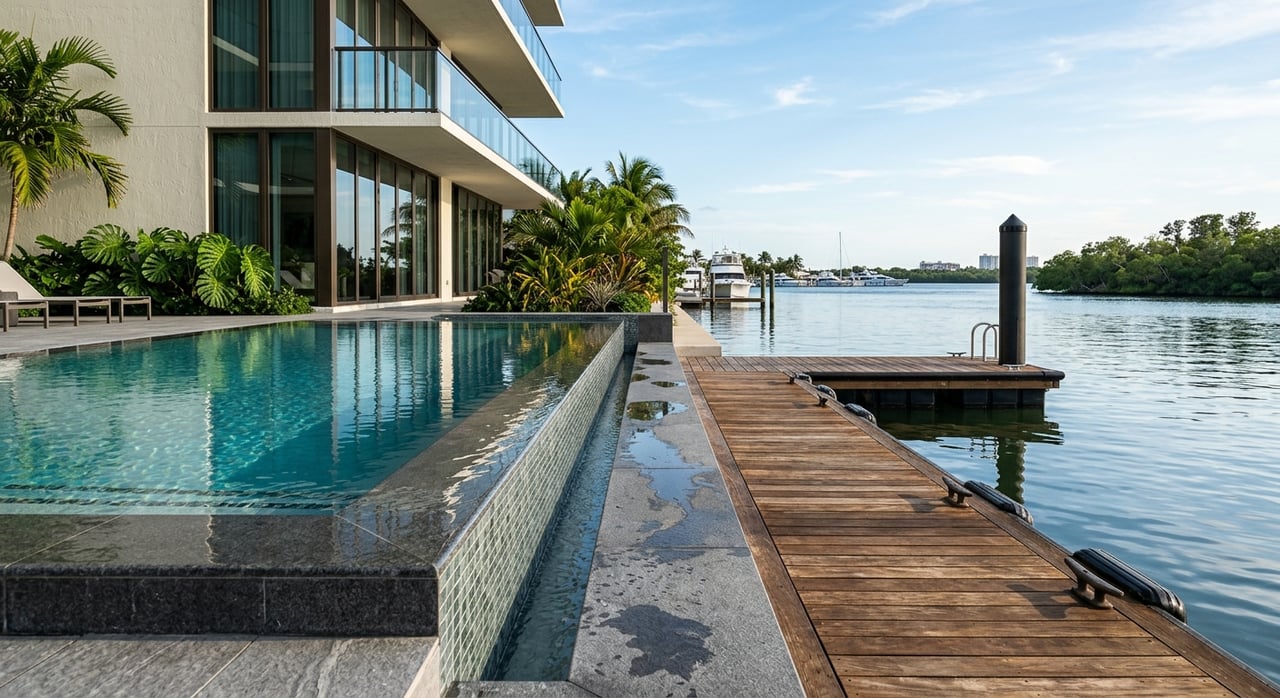
Evaluating Aventura Waterfront Condo Associations The Right Way
May 21, 2026
May 21, 2026
Buying an Aventura waterfront condo is about more than views, finishes, and amenities. You are also buying into an association with its own budget, repair schedule, inspection history, and waterfront operating rules. If you want to protect your time, capital, and lifestyle, you need to evaluate the condo association as carefully as you evaluate the unit itself. Let’s dive in.
In Aventura, that mindset matters. The City of Aventura maintains an Enhanced Building Safety Inspections Program and posts engineering reports, while also directing residents to raise building issues with the property manager and board. The city also notes that most of Aventura is in a FEMA Special Flood Hazard Area, with flooding risks tied to heavy rain, tropical storms, hurricanes, stormwater runoff, and coastal storm surge.
That means a waterfront condo association should be reviewed as an operating business with real long-term obligations. A beautiful lobby or updated kitchen does not tell you whether the building is financially ready for future repairs, waterproofing, seawall work, or structural updates.
If you only look at the monthly fee, you can miss the biggest issue. The more important question is whether the association is funding major repairs before they turn into surprise costs.
Florida requires a structural integrity reserve study, or SIRS, for residential condominium buildings that are three habitable stories or higher. The study must be repeated at least every 10 years and must cover major building components like the roof, structural system, fireproofing and fire protection, plumbing, electrical systems, waterproofing and exterior painting, windows and exterior doors, plus other large deferred items that affect those components.
For associations that existed on or before July 1, 2022, the deadline to complete the study is December 31, 2025, for each qualifying building. A required milestone inspection can be used at the same time to complete the study through December 31, 2026.
Florida also tightened reserve rules. For budgets adopted on or after December 31, 2024, associations that must obtain a SIRS cannot vote to fund less than the required reserve amount for SIRS items.
Aventura and Miami-Dade add more pressure to the process. Florida requires milestone inspections for buildings that are three habitable stories or more, generally by age 30, though local enforcement may require them by age 25 near salt water. Miami-Dade is even more specific for coastal buildings, requiring 25-year recertification for coastal condo and co-op buildings three stories or taller built on or after 1998, while other qualifying buildings generally follow a 30-year timeline.
For you as a buyer, this is where the real story starts. A strong association should be able to show you the latest reserve study, milestone inspection summary, reserve schedule, and a clear plan for any recommended repairs.
Ask for these early in your review period:
If the reserve study and budget do not match, that deserves a closer look. Florida law requires the association to update the SIRS before adopting a budget that departs from the study’s funding plan.
A high fee is not always bad, and a low fee is not always a bargain. In a waterfront building, the smarter move is to understand what the dues actually cover and whether those costs are realistic.
Florida requires annual budgets and cash-flow disclosures to show specific expense categories. These include security, management fees, taxes, recreation facilities, refuse collection, utilities, building maintenance and repair, insurance, administration and salary expense, and reserves for capital expenditures and deferred maintenance.
That breakdown helps you see whether the association is budgeting for the real cost of waterfront ownership. Wind, salt air, water exposure, and corrosion can make long-term maintenance more expensive than buyers expect.
When you review the budget, pay close attention to:
Florida also requires annual financial statements to disclose special assessments, lines of credit, or loans used to fund required reserve or repair obligations. That paper trail can help you tell the difference between a building with a long-term plan and one that is reacting to problems as they appear.
Florida gives owners and, in several cases, prospective purchasers access to important records. Official records include the declaration, bylaws, rules, meeting minutes, contracts, bids, inspection reports, building permits, the current question-and-answer sheet, and the most recent SIRS.
The association must also keep copies of key documents on the property for unit owners and prospective purchasers, including the declaration, bylaws, rules, question-and-answer sheet, most recent annual financial statement, and annual budget. If a building is organized and transparent, it is usually easier to confirm how it is being run.
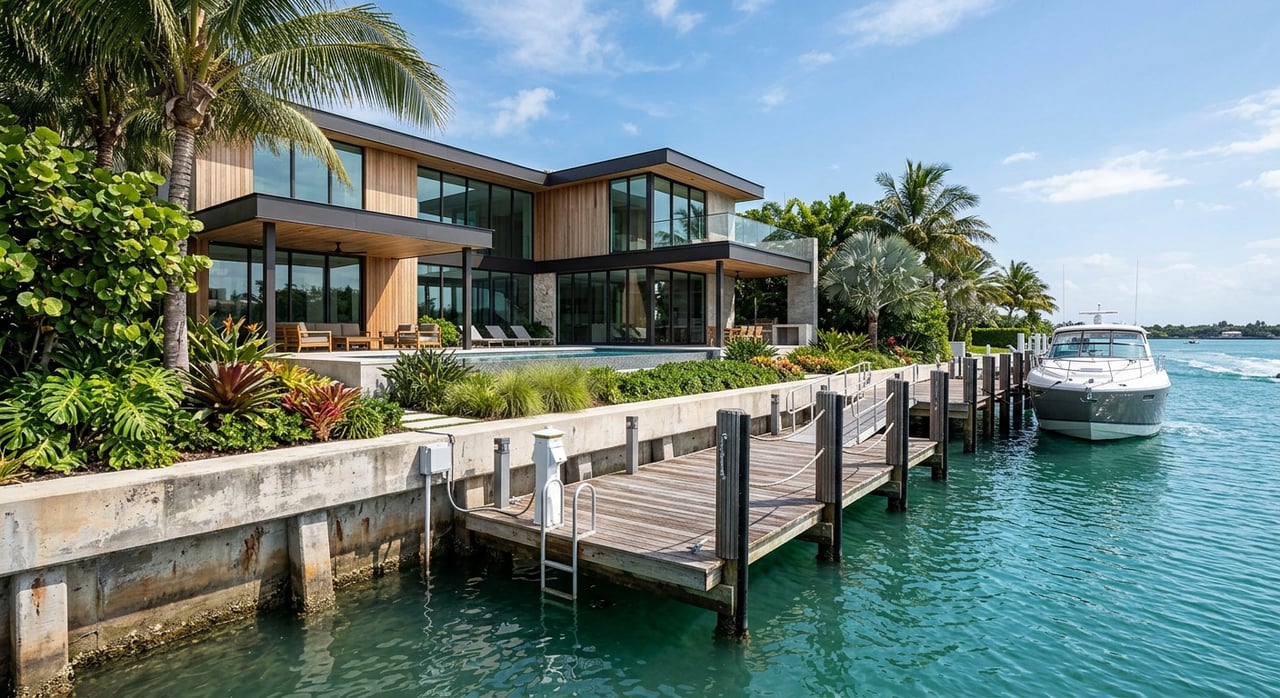
If boating is part of your waterfront lifestyle, do not make assumptions. In Aventura waterfront condos, slip rights and dock access are document-driven.
Florida defines limited common elements as common elements reserved for the use of specific unit or units. Depending on the declaration and later amendments, a dock, slip, or boat storage area may be a common element, a limited common element, or a separately controlled facility.
This affects more than convenience. It can shape who gets access, who pays for maintenance, and what rights transfer with the sale.
It also matters when upgrades are proposed. Florida generally requires the declaration to control material alterations or substantial additions to common elements. If the declaration is silent, approval from 75 percent of the total voting interests is generally required before work begins.
That can apply to:
The best boating questions are usually the least glamorous ones. Before you close, ask for the governing documents and any marina agreements, then confirm:
Miami-Dade also adds a permitting layer for waterfront facilities. A Class I permit is required before work in, on, over, or upon tidal waters or coastal wetlands, including most dock, seawall, boatlift, davit, and mooring-pile work. Marine facilities with 10 or more slips or tie-up spaces also need an annual operating permit.
For buyers who keep a boat or plan to, this is a major part of due diligence. A slip is only as useful as the rights, rules, and permit status behind it.
Aventura buyers should also pay close attention to permit history and long-term upkeep. The City of Aventura says unpermitted additions can affect recertification, and repairs identified in recertification reports generally require permits.
That makes permit history more than a technical detail. It can affect future costs, timelines, and even resale.
In Aventura, flood risk is not theoretical. The city says most of the area is in a Special Flood Hazard Area, with flooding commonly caused by heavy rainfall, tropical storms, hurricanes, stormwater runoff, and coastal storm surge.
That should shape how you evaluate the building’s operating plan. Look closely at how the association handles:
Pools, fitness centers, elevators, parking structures, waterfront decks, docks, and HVAC systems all cost money to maintain over time. A polished showing experience can hide deferred maintenance if you do not compare the amenity package to the building’s budget, inspection reports, and reserve planning.
A useful final step is to check for open permits, unresolved code issues, and a current repair plan tied to the latest milestone inspection and reserve study. In a well-run building, appearance and preparation should line up.
When you evaluate an Aventura waterfront condo association the right way, you reduce the chance of being surprised after closing. The goal is not to find a perfect building. The goal is to confirm that the association is transparent, financially prepared, structurally aware, and realistic about the costs of maintaining a waterfront property.
That disciplined approach is especially important if your purchase is tied to boating access, dock use, or a broader South Florida waterfront lifestyle. In those cases, the unit, the building, and the marine side of the property all need to make sense together.
If you want help evaluating the full picture, from association documents to waterfront considerations and closing coordination, Patrick Barnicle can help you approach the decision with clarity and confidence.
Stay up to date on the latest real estate trends.

Get assistance in determining current property value, crafting a competitive offer, writing and negotiating a contract, and much more. Contact Patrick today.