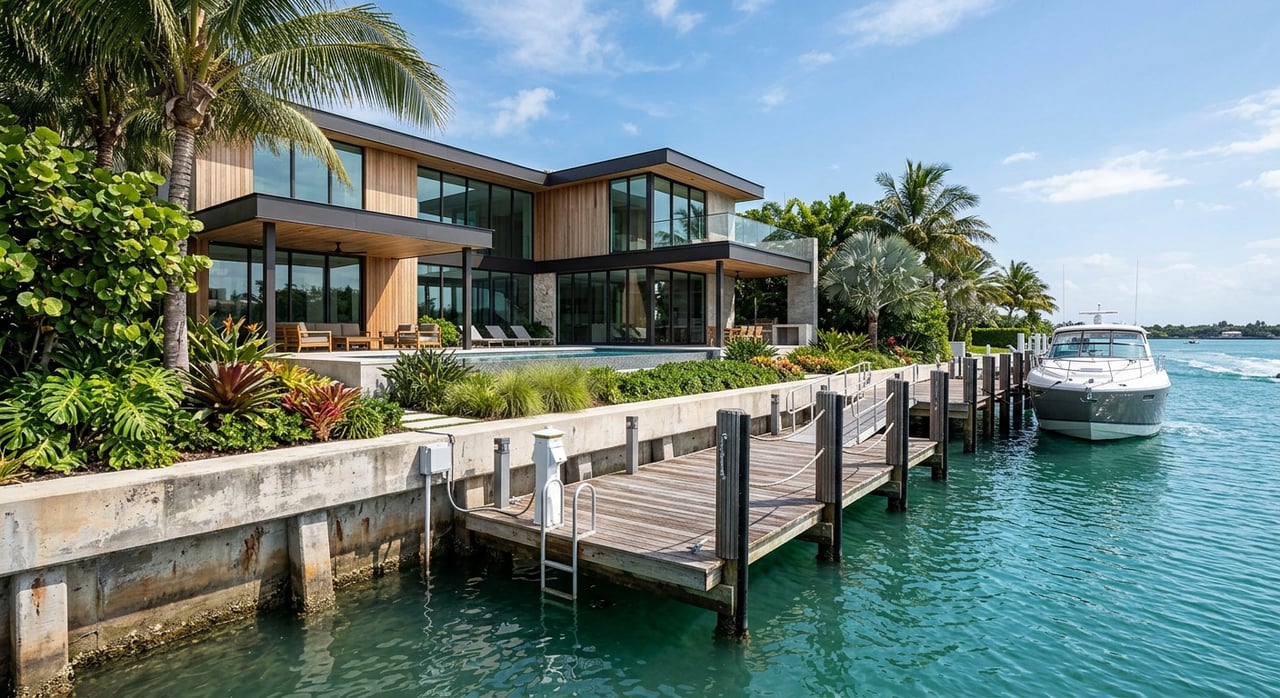
Lighthouse Point Homes for Boaters: What to Review
May 28, 2026
May 28, 2026
If you boat regularly, you already know that not all waterfront homes work the same way. In Lighthouse Point, the right purchase is often less about the view alone and more about how well a property fits your vessel, your route to open water, and your day-to-day routine. This guide breaks down what boaters should pay close attention to before you buy, so you can evaluate homes with more confidence and fewer surprises. Let’s dive in.
Lighthouse Point is built around the water. The city describes itself as a small town with a leisurely pace, with 80% single-family homes and 18 miles of waterways. It is also more than 95% developed, so most buyers are comparing existing homes, docks, seawalls, and street layouts rather than planning on raw land.
That matters if you want a true boating lifestyle. On the east side of the city, the waterways connect toward the Intracoastal Waterway near Hillsboro Inlet, and that access is a core part of how many buyers evaluate the market. In practical terms, you are not just buying a house in Lighthouse Point. You are buying into a specific waterway setup.
For serious boaters, water access is usually the first filter. A home may be waterfront, but that does not automatically mean it works for your boat. You need to think about route efficiency, bridge constraints, draft, and how quickly you can get from your dock to the Intracoastal, Hillsboro Inlet, and the Atlantic.
The city’s planning materials describe its deepwater canals and waterways as providing access to the Intracoastal Waterway, nearby Hillsboro Inlet, and the ocean. That is a major draw for buyers who want a residential setting without giving up usable cruising access. Still, each canal and route should be evaluated in the context of your specific vessel.
Two homes can both be on the water and still offer very different boating experiences. One may provide a simpler route to the inlet, while another may involve more turns, more idle time, or more bridge coordination. If you value fast ocean access, proximity to the Intracoastal and Hillsboro Inlet should be part of your first pass.
This is especially important if you use your boat often rather than occasionally. A route that feels manageable on paper may become frustrating if it adds repeated delays every time you head out. Over time, those small inconveniences can have a real impact on how much you enjoy the property.
Draft is another major factor. A canal may look suitable, but the real question is whether current depth supports your vessel comfortably in normal conditions. Buyers should verify current channel depths and navigation conditions using current NOAA electronic navigational charts, which NOAA identifies as its primary chart product and updates every weekday evening.
NOAA also provides custom chart tools that let boaters tailor depth and safety-contour information to a vessel’s draft. That makes chart review a practical due diligence step, not just a technical extra. If you own a larger vessel, or think you may upgrade later, this review becomes even more important.
Bridge profile can be just as important as water depth. For taller vessels, bridge clearance and opening schedules can directly shape whether a property is convenient or limiting. This is one of the biggest issues buyers sometimes underestimate when they focus only on dockage and square footage.
Federal regulation for Hillsboro Inlet states that the SR A-1-A drawbridge must open on signal, but from 7 a.m. to 6 p.m. it only needs to open on the hour, quarter hour, half hour, and three-quarter hour. That means timing matters if your route depends on bridge openings. In addition, Lighthouse Point’s Bridge Replacement Master Plan shows the city is replacing key bridges and seeking to maximize allowable heights under new structures, which makes current and future clearance part of the conversation.
In Lighthouse Point, the street itself can change how a home feels. The city notes that many streets wind and twist, with a number of cul-de-sacs. Because of that layout, two similar waterfront properties may offer very different levels of privacy, traffic flow, and ease of access.
This is one reason experienced buyers spend time both on the water and on the street before making a decision. A secluded lot may feel calmer and more tucked away, while another location may be tied more closely to a bridge or key route through the neighborhood. Neither is automatically better. It depends on how you want the property to function.
Some areas have a stronger dependence on a single access point. The city says the NE 31st Court Bridge is the sole point of access to a residential island with 25 lots. It also says the Sample Road Bridge serves as a single point of access and hurricane evacuation route to the Lake Placid community.
For buyers, that means you should ask a practical question early: how dependent is this home on one bridge or one route in and out? That does not make a property less appealing by itself, but it should be part of your evaluation. Access patterns can affect convenience, traffic experience, and planning during major weather events.
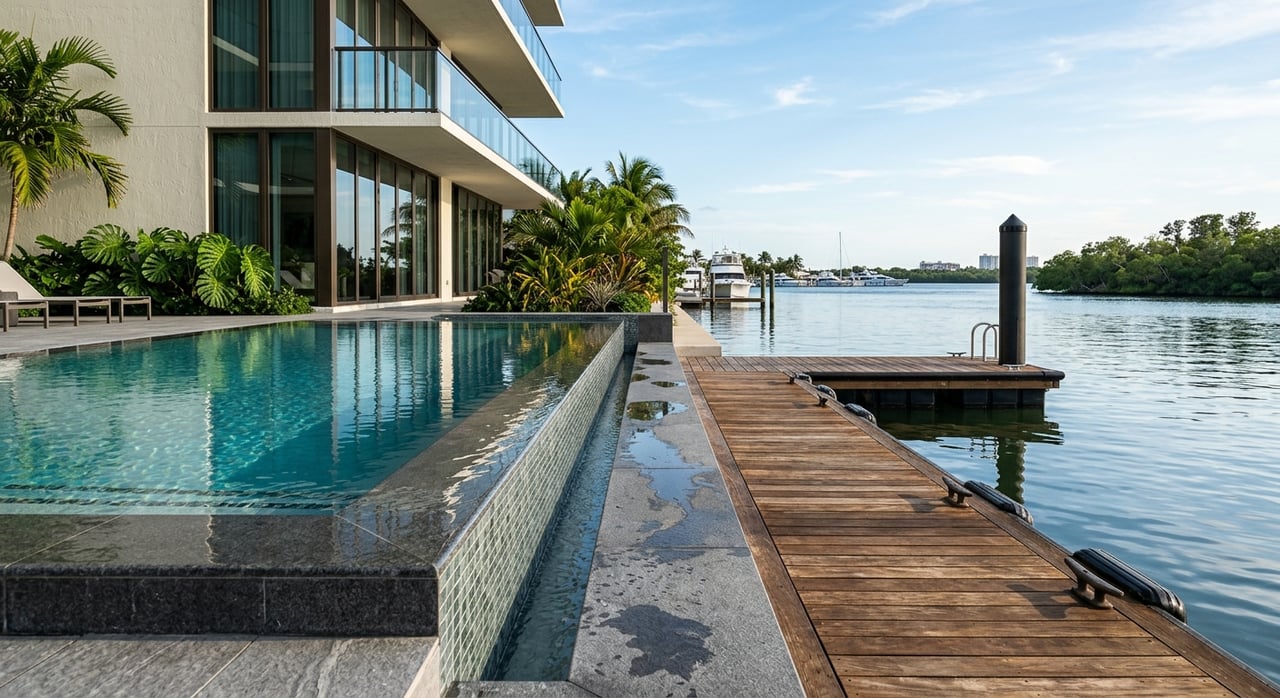
With waterfront property, the house is only part of the asset. The dock and seawall can be just as important, especially if you are buying for active boat use. Their condition, permitted status, and suitability for your vessel should all be reviewed before you get too far into a transaction.
Lighthouse Point’s dock and seawall checklist requires building, electrical, and plumbing paperwork as applicable, along with outside-agency approvals from Broward County, the Florida Department of Environmental Protection, or the Army Corps of Engineers when required. The city also requires signed and sealed plans and an updated dock or seawall survey before final inspection. For new waterfront homes or substantial additions, the city requires two signed and sealed engineer letters confirming that the seawall is in good condition and can support upland improvements.
A dock is not automatically usable just because it exists. You should confirm whether the dock length, layout, water depth, and positioning fit the boat you own now. It is also smart to think ahead if you may change vessels later.
The city’s current resources include a 2022 hydrographic survey, which reinforces why canal depth and maintenance history matter. Buyers should ask when the waterway was last surveyed, whether dredging has occurred, and whether the dock position works for both current and future boating plans. In a market like Lighthouse Point, those details can shape long-term usability.
Flood exposure should be reviewed alongside boating access, not after the fact. Lighthouse Point states that it is in a flood-prone area and directs property owners and buyers to flood resources. The city also notes that elevation certificates are available through the Building Department for some properties.
FEMA identifies the Flood Map Service Center as the official source for flood hazard mapping products and flood-zone determinations. For buyers, that means flood zone, elevation, and likely insurance costs should be part of your initial diligence. If two homes seem similar, these factors can meaningfully affect ownership costs and risk profile.
Because Lighthouse Point is a mature, highly built-out city, many homes are older, renovated, or redeveloped. That can create excellent opportunities, but it also means you should understand whether additional inspection obligations may apply. Property age is not just a style issue. It can be a due diligence issue too.
Broward County requires Building Safety Inspections on buildings over 25 years old and over 3,500 square feet, although single-family homes, duplexes, and all buildings under 3,500 square feet are exempt. If you are considering a larger property, especially one with extensive upgrades or additions, that context is worth reviewing early in the process.
Lighthouse Point is not simply a city with waterfront homes. It is a city with an active boating environment. The local setup around safety, fueling, and water-based convenience can influence how easy ownership feels once you move in.
The city has its own Marine Patrol Unit, which says its role is to promote boating safety education, enforce marine laws and ordinances, and provide police services to residents along the waterways. That reflects how central boating is to daily life here. It also means boat owners should expect the waterways to be managed as an active residential environment.
If dockside fueling matters to you, verify how it works locally. Lighthouse Point states that boat fueling through mobile bunkering is governed by city code, and only companies permitted by Lighthouse Point Fire Rescue may provide the service. The city also posts the currently permitted diesel and gasoline vendors.
That may sound like a small detail, but it affects day-to-day convenience. If you use your boat often, understanding fueling logistics ahead of time can help you compare properties more realistically.
Lifestyle details can also matter. Lighthouse Point notes a Water Taxi stop at Nauti Dawg on Marina Circle, which shows how some on-water amenities are part of the city’s daily rhythm. For some buyers, that kind of convenience adds to the appeal of using the waterfront for more than just private dockage.
When you tour homes in Lighthouse Point, it helps to evaluate each property in the same order. That keeps emotion from getting ahead of function and helps you compare options more clearly.
Use this checklist as a starting point:
Lighthouse Point rewards buyers who look beyond the label of “waterfront.” In a city with 18 miles of waterways, winding residential streets, and a mature housing stock, the best purchase is often the one that fits your vessel and your lifestyle with the fewest compromises. That takes local market knowledge and a clear understanding of how the property and boating side intersect.
If you want help evaluating waterfront homes through both a real estate and vessel lens, Patrick Barnicle offers a disciplined, high-touch approach built around South Florida waterfront living.
Stay up to date on the latest real estate trends.


Get assistance in determining current property value, crafting a competitive offer, writing and negotiating a contract, and much more. Contact Patrick today.